

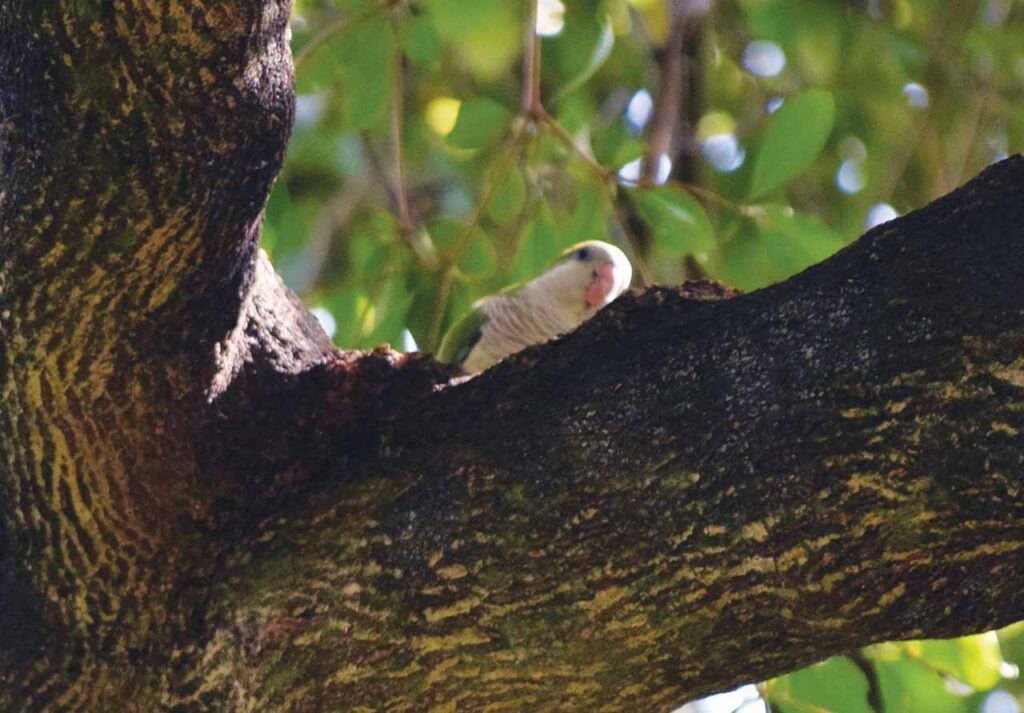
If you’ve spent any time outdoors in South Florida, you’ve probably heard them before you ever saw them. A sharp squawk overhead while walking the dog. A flash of green streaking across a canal. A pair of colorful birds perched high in a palm tree behind a Publix parking lot.
These aren’t zoo escapees or someone’s recently lost pets. Wild parrots have become part of everyday life across Broward, Palm Beach, and Miami-Dade counties. While most aren’t native to Florida, many species have established thriving populations that have become one of the region’s most recognizable wildlife surprises.
The parrot you’re most likely to spot is the monk parakeet, also called the Quaker parrot. Bright green with gray chests, they’re known for building enormous stick nests on power poles, cell towers, stadium lights, and other elevated structures.
In Broward and Palm Beach counties, these oversized nests have become familiar landmarks. Many residents recognize the nests long before they learn the birds’ name.
Then there are the true showstoppers.
Blue-and-gold macaws and scarlet macaws are seen most often in Miami-Dade County, particularly around Coconut Grove, Coral Gables, and parts of South Miami. These large, brilliantly colored birds look like they belong in a tropical rainforest, not soaring above US-1 or neighborhood streets.
Red-masked parakeets are another familiar sight. Smaller and incredibly fast, they dart through neighborhoods in noisy flocks, flashing bright green feathers with vivid red faces. More often than not, you’ll hear them before you ever catch a glimpse.
Ask five South Floridians and you’ll probably hear five different stories.
Some believe hurricanes released captive birds. Others point to the exotic pet trade during the 1960s through the 1980s. The most likely explanation is that multiple escape and release events occurred over several decades.
South Florida was once a major hub for imported exotic birds. Some parrots escaped from breeders, pet stores, aviaries, and private owners. Others were intentionally released when they became too difficult or noisy to keep as pets.
Once free, they discovered something important: South Florida felt a lot like home.
The region’s warm climate, fruiting trees, canals, and urban green spaces provided ideal conditions for several species to survive, reproduce, and establish stable populations.
Parrots are most often found near canals, neighborhood parks, golf courses, and older communities with mature trees.
Some of the best places to spot them include:
They especially favor palms, royal poinciana trees, and tall utility structures. Monk parakeets, in particular, seem to have a talent for selecting the most inconvenient electrical equipment imaginable.
Residents generally fall into one of two camps.
Some absolutely love seeing the parrots and excitedly alert neighbors whenever a flock of macaws appears overhead. Others appreciate their beauty but could do without the early morning wake-up calls.
Pet owners quickly learn that parrots attract plenty of attention from dogs and cats.
A dog barking at the top of a palm tree is a familiar sight throughout South Florida. Cats often freeze beneath the branches, eyes locked upward, carefully planning hunting missions that never quite happen.
This question has a more complicated answer than many people expect.
Most of the parrots living wild in South Florida are not native species. Monk parakeets are generally considered an invasive species because their large stick nests can interfere with electrical infrastructure. Utility companies routinely remove nests when they threaten power equipment, although the birds are remarkably quick to rebuild them.
Larger parrots, including many macaws, are generally tolerated and even celebrated by local communities, particularly in Miami-Dade County. While they aren’t afforded the same protections as Florida’s native bird species, they have become part of the area’s unique urban wildlife.
If you encounter wild parrots, the best approach is simply to enjoy them from a respectful distance.
South Florida is famous for unexpected wildlife, from iguanas and peacocks to burrowing owls and sea turtles. Wild parrots have earned their place on that list. Loud, colorful, and a little chaotic, they’ve become part of the soundtrack of life across the region.
Once you start noticing them, you’ll probably find yourself looking up every time you hear that unmistakable squawk overhead.
No. Most wild parrots living in South Florida descended from escaped or released pet birds that established breeding populations over time.
They’re commonly seen throughout Broward, Palm Beach, and Miami-Dade counties, especially near canals, parks, mature neighborhoods, and areas with tall palm trees.
Monk parakeets are generally considered an invasive species because their nests can interfere with electrical infrastructure. However, many residents enjoy seeing them despite the challenges they create.
No. Feeding wild parrots can alter their natural behavior and create health and safety concerns for both birds and people.
Some can. Even in the wild, certain parrots have been observed mimicking whistles, alarms, and other sounds they regularly hear.

Introducing The World's Smartest Kitty Litter!
All varieties include signature color-changing health monitor and advanced odor control.

Get The Pet Junction Insider In Your Inbox
Discover South Florida's best pet-friendly places, local events, trusted businesses, helpful pet tips, new videos, and exclusive giveaways, delivered right to your inbox.
You May Also Like
Similar to Wild Parrots in South Florida: Why They're Here and Where to Spot Them
No results available


